
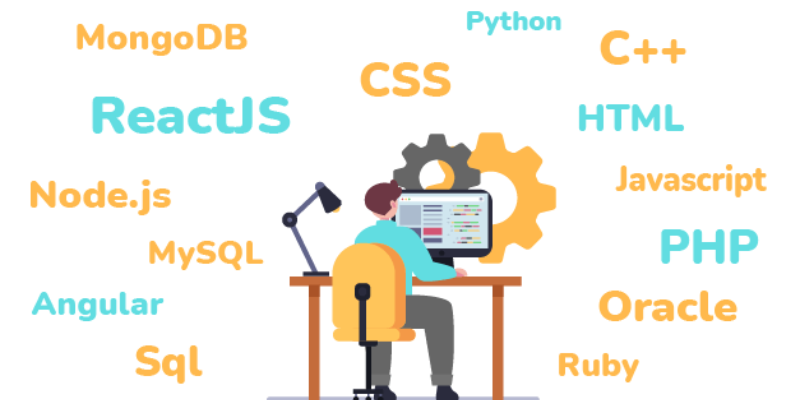
One of the best career choices in today’s tech-driven environment is to become a Java Full-Stack Developer. This position integrates problem-solving, logic, and creativity in front-end and back-end systems.Java’s supremacy in the software industry has been sustained by its dependability and versatility. As a Full-Stack Developer, you bridge the gap between functionality and design. You may differentiate yourself in competitive job marketplaces by mastering critical technical and soft skills. The secret to success is having a solid grasp of frameworks, tools, and collaboration.
Every talent expands your development expertise by one level. Gaining proficiency in these 13 areas opens up countless opportunities for both professionals and students. With the help of this tutorial, you can gain the self-assurance and expertise required to be successful in full-stack programming. Let’s go over each crucial ability in detail for your mastery and career advancement. Enroll in the Core Java Training in Chennai at FITA Academy to gain expert mentorship, practical experience, and a deep understanding of Java programming. This course equips you with the skills to master object-oriented programming, explore essential Java concepts, develop powerful applications, manage data structures effectively, and create scalable, industry-ready projects with confidence and efficiency.
Responsibilities of a Java Full-Stack Developer
A Full-Stack Java The front-end and back-end components of web applications are designed, constructed, and maintained by developers. This implies that you manage everything, including user interfaces and databases. Having a clear understanding of your duties enables you to approach assignments effectively and methodically. Writing clean code, guaranteeing performance, and optimizing for scalability are all essential. Every day, developers work together with project managers, designers, and testers. Collaboration and workflow are enhanced when both sides of development are understood.
Additionally, a full-stack developer oversees post-launch maintenance and application deployment. Maintaining long-term relevance requires keeping up with emerging frameworks and tools. You have job flexibility if you are adaptable at every stage of development. Your job is trustworthy and efficient when you have strong analytical and problem-solving abilities. Gaining an understanding of the full-stack position enables you to independently develop end-to-end solutions.
Mastering Backend Development
In full-stack applications, Java continues to be the cornerstone of backend development. Gaining knowledge of its fundamental ideas improves your debugging and programming logic skills. Additionally, developers should have a solid understanding of Java garbage collection and memory management. Daily coding practice aids in the efficient reinforcement of theoretical ideas. Advance your programming career with Core Java Training in Chennai, where you’ll gain practical experience in object-oriented programming, data structures, exception handling, multithreading, and application development. This comprehensive training equips you with the essential skills to design, develop, and deploy robust, industry-ready Java projects confidently and efficiently.
Understanding the backend is enhanced by investigating Java I/O, JDBC, and Servlets. You can create database-driven apps and APIs with confidence if you understand these foundational concepts. Developers having a strong grasp of Java grammar and architecture are highly valued by employers. Practical understanding is sharpened through ongoing learning through little initiatives. To become a proficient full-stack professional, one must have a solid foundation in Java.
Learning Front-End Technologies
A Full-Stack Java Developers need to be familiar with user experience and front-end design. JavaScript adds interactivity, CSS styles it, and HTML creates structure. These technologies improve the usability and engagement of your applications. Gaining knowledge of HTML tags and semantic structure enhances the accessibility of websites. CSS aids in managing colors, layout, and responsive design across a range of devices. Learners who enroll in a Training Institute in Chennai for Core Java Training can not only develop strong expertise in object-oriented programming, data structures, exception handling, and multithreading but also gain valuable hands-on experience. Through practical learning and guided instruction, they gradually build the confidence to design, develop, and deploy robust, industry-ready Java applications that meet real-world development standards.
You can solve problems more quickly if you know how browsers render material. Bootstrap and other frameworks make responsive site creation much easier. Project integration is enhanced when JavaScript front-end skills are combined with Java backend functionality. Learning the fundamentals of front-end development improves technical balance and creativity. Your ability to create aesthetically pleasing, useful applications is strengthened by regular practice and experimentation.
Exploring Frameworks
Frameworks streamline development and improve the scalability, effectiveness, and maintainability of projects. For the rapid development of Java-based web applications, Spring Boot is essential. It manages dependencies, security, and configuration automatically. You can simply construct RESTful APIs and microservices by learning Spring Boot. Frameworks like as Angular and React improve performance and interaction on the front end. React emphasizes reusable components, whereas Angular makes use of TypeScript.
The needs of the project and individual preferences will determine which framework is best. Practice utilizing both front-end and back-end frameworks to create tiny projects. Communication runs well when you understand how they communicate via APIs. Gaining proficiency with frameworks increases coding efficiency and productivity. Maintaining current knowledge of the most recent framework versions enhances your development profile. Developers with at least one major front-end and back-end framework experience are preferred by employers.
Web Services Integration
APIs allow an application’s front end and back end to be easily connected. Due to their simplicity and portability, RESTful APIs are the most widely used. Understanding how to create and use APIs facilitates effective system integration. HTTP methods like GET, POST, PUT, and DELETE must be understood. Common data types used in API communication are XML and JSON. Effective API testing during development is facilitated by the use of Postman or Swagger. Using Spring Boot to build APIs gives you real-world backend experience.
These APIs can be used by front-end developers with frameworks like Angular or JavaScript. Protecting sensitive user data requires secure API integration. Error management done right guarantees seamless data transfer between services. Comprehending APIs enables you to create scalable, networked applications.
Managing Core Java Databases
Databases form the foundation of every web application. Learning SQL helps you manage structured data efficiently through tables and relationships. Popular SQL databases include PostgreSQL and MySQL. Understanding joins, queries, and normalization allows you to optimize data storage and performance. NoSQL databases like MongoDB handle unstructured data, making them perfect for dynamic web applications. Knowing both SQL and NoSQL systems gives you flexibility across different project types. Java developers often use Hibernate or JPA to interact seamlessly with databases and ensure smooth data operations. This makes Core Java a popular programming language.
Version Control with Git and GitHub
Version control keeps development organized and collaborative. Git helps you track code changes and fix errors efficiently. Learning Git commands like commit, push, and pull is essential for effective teamwork. GitHub provides a platform to store and share repositories online. Developers can collaborate on the same project without overwriting each other’s work. Using branches allows you to manage specific features independently. Hosting projects on GitHub builds a strong portfolio that attracts recruiters. Regular Git practice boosts confidence and enhances your teamwork skills in real-world development projects.
Build with Core Java Maven and Gradle
Build tools simplify Java application deployment, testing, and compilation. Maven and Gradle are the most popular choices for full-stack projects. Maven uses XML for configuration, while Gradle supports Groovy scripts. Both tools automate dependency management and streamline build processes efficiently. Understanding these technologies helps you optimize development workflows. With fewer manual steps, you can create, test, and launch applications faster, improving productivity and overall project efficiency.
Deployment and Containerization
Learning containerization enables you to deploy Java applications across multiple platforms with ease. Automating builds minimizes human errors during updates and releases. You can schedule deployments and test versions more quickly. Understanding CI/CD pipelines enhances your confidence and accelerates delivery cycles. Companies actively seek developers who demonstrate strong skills in automation and containerization tools, as these abilities improve efficiency and ensure smooth software deployment processes.
Hosting Core Java Full-Stack Applications
Cloud systems help modern applications scale, distribute, and store data more efficiently. Microsoft Azure, Google Cloud, and AWS lead the market. Full-stack Java developers use these platforms to securely host databases and APIs. Understanding cloud fundamentals improves your project’s availability and scalability. Cloud services offer automatic scaling, load balancing, and virtual servers, enabling developers to deploy, manage, and optimize applications seamlessly across different environments.
Final Suggestion
Mastering these 13 crucial areas transforms you into a full-stack Java developer. You ensure long-term professional success by combining technical expertise, creativity, and discipline. Each skill you build strengthens your professional foundation. In the rapidly changing tech industry, you prepare yourself for the workforce through practice, feedback, and continuous learning. Remember, becoming a full-stack specialist is a journey of growth, not a final destination. Keep coding, stay curious, and develop impactful applications.
