
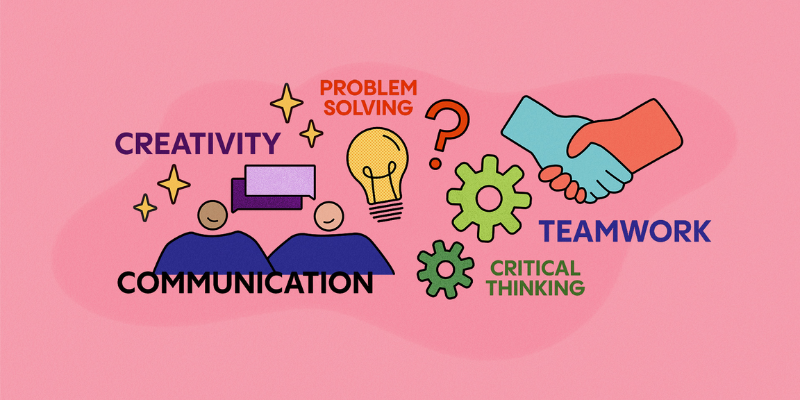
Technical proficiency is insufficient to guarantee career success in today’s fast-paced, highly collaborative workplace. How well people interact, communicate, and adapt in the workplace, whereas hard skills assist employees in carrying out specific tasks. Becoming more and more important to employers since they have a direct impact on customer satisfaction, team cohesion, productivity, and leadership potential. Which range from teamwork and communication to emotional intelligence and flexibility, influence how people relate to others and deal with obstacles at work.
Improving soft skills is crucial for workers at all levels, not just managers and leaders. Professionals can enhance their relationships, boost productivity, and progress in their professions by cultivating excellent soft skills. This blog examines the value of soft skills, how to develop them practically, and how people and organizations may foster a culture that encourages ongoing development of soft skills. Enroll in the Soft Skills Training at FITA Academy to strengthen your communication, interpersonal, and leadership abilities. Develop workplace confidence, and enhance your professional presence, empowering you to excel in interviews, teamwork, and long-term career growth.
Their Importance in the Workplace
A collection of behavioral, interpersonal, and communication skills that affect how people work and engage with others are referred to as soft skills. Soft talents are transportable across industries and occupations, in contrast to technical skills. Communication, cooperation, problem-solving, time management, flexibility, and emotional intelligence are a few examples. These abilities are essential for fostering a supportive and effective workplace. Strong soft skills enable workers to work well together, resolve issues in a professional manner, and adapt to change.
On the other hand, poor soft skills can result in miscommunication, low morale, and decreased productivity. Because soft skills have a direct impact on team performance and organizational success, employers give them top priority. Projects proceed more quickly and produce better results when staff members collaborate well and communicate properly. The first step to improving soft skills and attaining long-term professional success is realizing their importance.
Employers Look for in Employees
Professionals with a well-rounded mix of technical expertise and critical soft skills are sought after by employers. One of the most important soft skills is communication since it promotes cooperation, clarity, and efficient information exchange. Equally crucial is teamwork, which allows workers to collaborate peacefully to achieve shared objectives. Adaptability enables people to react favorably to change, whether it entails new jobs, procedures, or technologies. Employees with emotional intelligence are better able to comprehend, control, and empathize with others.
Professionals can examine events and make wise decisions by using critical thinking and problem-solving skills. Productivity and dependability are guaranteed by time management and responsibility. Even in non-managerial positions, employers respect leadership abilities because they demonstrate initiative and accountability. Gaining proficiency in these essential soft skills improves employability and positions professionals for internal advancement. Industry-oriented Soft Skills Training in Chennai, designed to enhance communication, interpersonal, and professional skills and prepare you for corporate roles across diverse industries.
Feedback in Soft Skill Development
In order to improve soft skills in the job, training and feedback are essential. Workshops, seminars, and organized training programs teach staff members the value of soft skills and how to develop them. Participants can rehearse real-life situations in a secure setting through role-playing games, group discussions, and simulations. Feedback is equally vital since it enables people to identify their areas of strength and growth.
Self-awareness and development are promoted by constructive criticism from supervisors, peers, or mentors. Frequent performance evaluations that emphasize both behavioral and technical elements support the development of soft skills. Employers that prioritize open communication and ongoing education foster a supportive work environment. Professionals can improve their interpersonal skills and work more efficiently when training and feedback are combined.
Improve Communication Skills at Work
Strong connections at work are built on effective communication. Employees should engage in active listening by paying close attention to others and deliberately replying in order to improve their communication abilities. Collaboration is enhanced and misconceptions are decreased when ideas are expressed clearly and succinctly. Emails and reports are examples of written communication that should be clear, organized, and professional. Inquiring and seeking clarification shows interest and helps avoid mistakes. Learners who enroll in a Training Institute in Chennai for Soft Skills can gain strong communication abilities, workplace readiness, and professional confidence that enhance their career growth across diverse industries.
Body language and tone of voice are examples of nonverbal communication that have a big impact on how people interpret messages. Over time, confidence is increased by taking part in meetings, talks, and presentations. By asking for criticism and seeing successful communicators at work, employees can further enhance their communication skills. Building trust with stakeholders and coworkers is facilitated by regular practice and knowledge.
Enhancing Teamwork and Collaboration Skills
Collaboration and teamwork are critical to accomplishing organizational objectives. It takes cooperation, responsibility sharing, and respect for different viewpoints to improve these abilities. Workers should concentrate on developing trust by acting with dependability and transparency. Teams that communicate openly are more aligned and have fewer disagreements.
A sense of inclusion is fostered by actively offering ideas while appreciating the opinions of others. Since conflicts are unavoidable in collaborative settings, conflict resolution skills are equally crucial. Team dynamics are strengthened when problems are handled professionally and solutions are the main focus. Employees can better grasp one another’s talents and working styles by taking part in team-building exercises. Teams are more creative and productive when members value cooperation over rivalry. Good teamwork abilities foster a healthy company atmosphere in addition to improving project outcomes.
For Better Workplace Relationships
The capacity to identify, comprehend, and control one’s own and other people’s emotions is known as emotional intelligence. Gaining emotional intelligence improves connections at work and productivity. People who are self-aware are better able to comprehend how their emotions affect their actions and choices. Professionals who possess self-regulation are able to handle stress and react composedly under difficult circumstances. Empathy enables workers to comprehend the viewpoints of their coworkers and form deep relationships. This is why soft skills are essential for the workplace.
Effective leadership, teamwork, and conflict resolution are all enhanced by high emotional intelligence. By engaging in mindfulness exercises, thinking back on their responses, and asking for feedback, workers can improve their emotional intelligence. Communication is strengthened by paying attention to emotional signs and reacting sensitively. Professionals can improve teamwork and job satisfaction by fostering a more courteous and supportive work environment through the development of emotional intelligence.
Overcoming Challenges in Developing Soft Skills
Developing soft skills can be challenging, especially for those accustomed to focusing solely on technical tasks. Common barriers include limited awareness, resistance to feedback, and few opportunities for practice. Workplace pressure and time constraints can also hinder progress. To overcome these challenges, employees should adopt a growth mindset and treat soft skills as essential tools for professional success.
Seeking mentorship and learning from experienced professionals provides valuable guidance and direction. Setting personal goals and practicing skills consistently builds confidence over time. Employers can support employees by encouraging open communication and recognizing progress. Although overcoming these challenges requires perseverance and commitment, the long-term benefits make the effort worthwhile.
Tips for Continuous Soft Skill Improvement
Improving soft skills is an ongoing process that requires consistent effort. Employees should actively seek learning opportunities such as workshops, online courses, and professional development programs. Practicing self-reflection helps individuals evaluate their progress and identify areas for improvement. Observing successful colleagues and adopting effective behaviors provides practical insights that support continuous growth.
Connecting with professionals from diverse backgrounds strengthens communication skills and increases adaptability. Regularly seeking feedback ensures continuous improvement and self-awareness. Maintaining a positive mindset and staying open to change support long-term growth. By consistently developing soft skills, professionals can adapt to evolving workplace expectations and achieve sustained career success.
Soft Skill Foundation for Career Growth
Soft skills drive individual effectiveness, strengthen team performance, and fuel organizational growth. When professionals actively develop soft skills in the workplace, they improve communication, build stronger relationships, and achieve higher performance.
As industries continue to evolve, those who invest in soft skill development remain adaptable, confident, and competitive. By understanding their importance and consistently applying practical improvement strategies, individuals create a strong foundation for long-term career success. Let’s continue enhancing soft skills and build workplaces that champion collaboration, empathy, and excellence.
