
I used to think cloud technology was just “someone else’s servers,” until I started seeing how many jobs now expect real cloud knowledge, not just basic awareness. Developers, analysts, support engineers, even business teams are expected to understand how cloud systems work. That curiosity is what pushes many learners to go deeper through structured learning paths like Cloud Computing Courses in Trichy, where the focus moves beyond theory into how real industries actually use cloud platforms in daily operations.
How businesses move from physical servers to cloud systems
Many companies start their cloud journey by shifting from physical servers to cloud infrastructure. Instead of maintaining data centers, they rent computing power, storage, and networks online. This reduces hardware costs and avoids constant maintenance issues. For industries, this shift is less about technology hype and more about reliability and flexibility. Teams can scale systems when demand rises and reduce them when business slows, without rebuilding infrastructure from scratch.
Cloud adoption in manufacturing and logistics
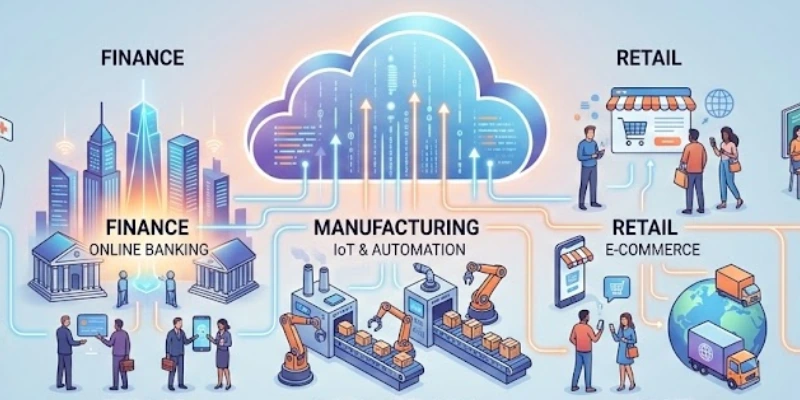
Manufacturing companies use cloud platforms to track inventory, manage supply chains, and monitor machines. Sensors connected to cloud systems send real-time data about production, faults, and performance. This helps teams react faster to problems instead of waiting for reports. Logistics companies use cloud tools for route planning, tracking shipments, and managing warehouses. These systems make operations smoother and reduce delays that affect customers and business trust.
Healthcare and data-driven care systems
Hospitals and healthcare companies rely on cloud systems to store patient records, manage appointments, and support diagnostic tools. Cloud platforms allow doctors and staff to access data securely from different locations. This is useful for telemedicine and remote consultations. The cloud also supports AI-based health tools that analyze scans and reports. For professionals entering this field, understanding cloud security and data privacy becomes just as important as technical skills.
Finance, security, and real-time services
Banks and financial firms use cloud platforms for transaction processing, fraud detection, and customer services. Cloud systems handle large volumes of data and support real-time monitoring. Security plays a big role here, so encryption, access control, and compliance systems are deeply connected to cloud infrastructure. Many tech learners start building these skills through AWS Training in Trichy, where cloud architecture and security concepts connect directly to real financial industry needs.
Startups and digital-first companies
Startups rarely build physical infrastructure anymore. They launch directly on cloud platforms because it’s faster and cheaper. This allows small teams to build apps, websites, and services that can scale to thousands of users without major technical changes. Cloud tools help them test ideas quickly, store user data, and manage performance. For developers, this environment builds strong practical experience with real deployment systems, not just local projects.
Regional job growth and cloud skills
Cloud adoption isn’t limited to big cities or global companies. Regional businesses are also shifting to cloud systems for billing, customer management, and digital services. This creates demand for skilled professionals across different locations. Learners who build cloud knowledge through local learning paths, including Cloud Computing Courses in Erode, often find more opportunities because small and mid-sized companies need people who can manage cloud systems practically, not just theoretically.
Cloud and career roles in tech teams
Cloud technology has changed job roles themselves. Developers now need deployment skills, testers work with cloud-based environments, and support engineers manage cloud platforms daily. Even non-technical roles use cloud dashboards and analytics tools. Cloud knowledge is no longer limited to system admins. It’s becoming a shared skill across teams, which changes how people prepare for interviews and real project work.
Industries are adopting cloud-based technologies because it makes business faster, simpler, and more adaptable. For professionals, this shift changes what “being skilled” really means. It’s no longer just coding or IT support; it’s understanding how systems run, scale, and stay secure in real environments. That kind of mindset prepares people for long-term growth and future roles in modern tech ecosystems, especially when learning paths like AWS Training in Salem are seen as part of building future-ready careers rather than just learning tools.
Also Check: What are the Best AWS Machine Learning Services and Tools?
